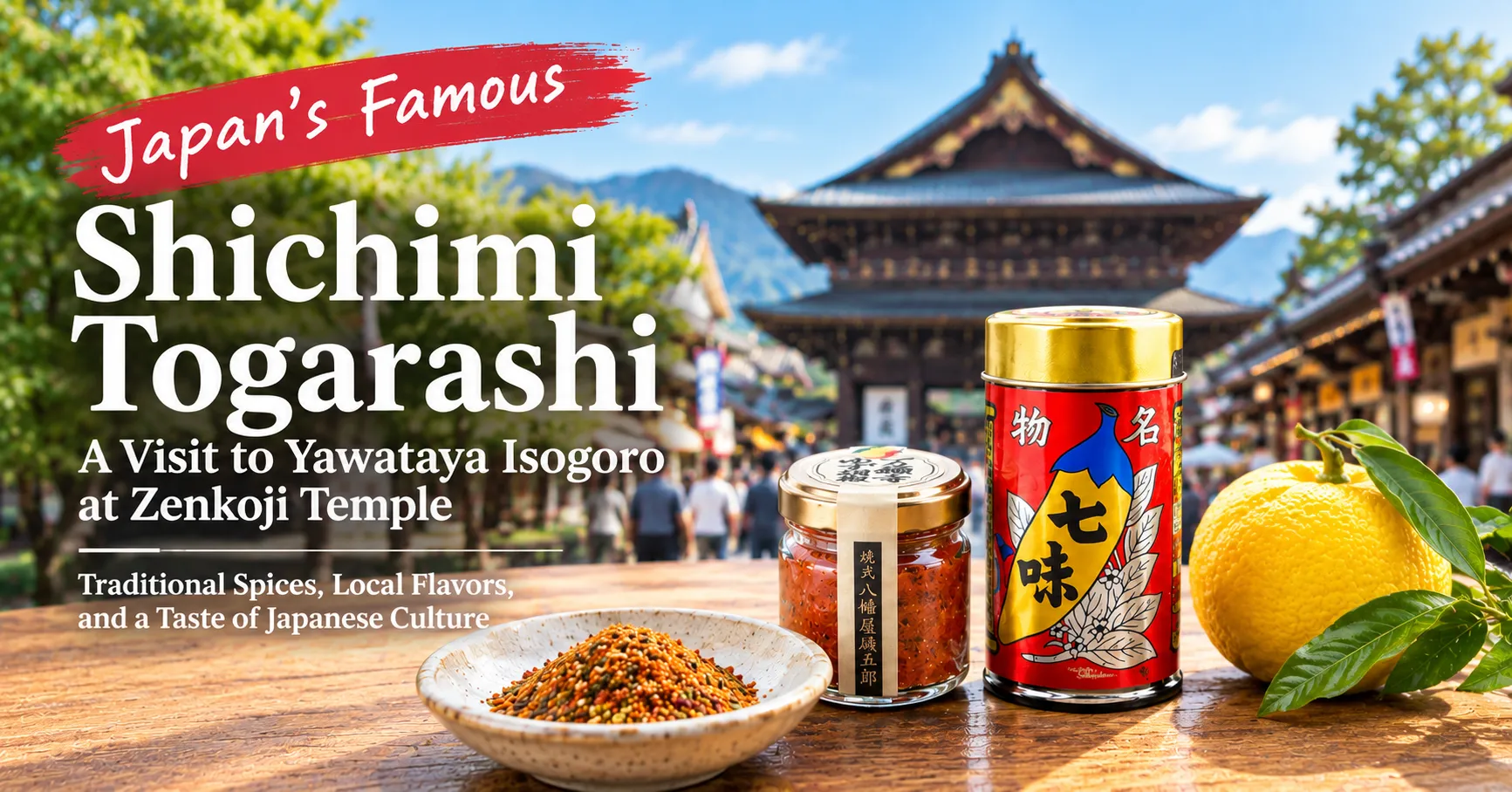
If you have eaten at a Japanese restaurant, you may have noticed small containers of seasonings on the table.
Salt, pepper, soy sauce, and shichimi togarashi, a Japanese seven-spice blend, are commonly available so customers can adjust the flavor of their food to their liking.
Shichimi is one of the seasonings that I often use at home, too.
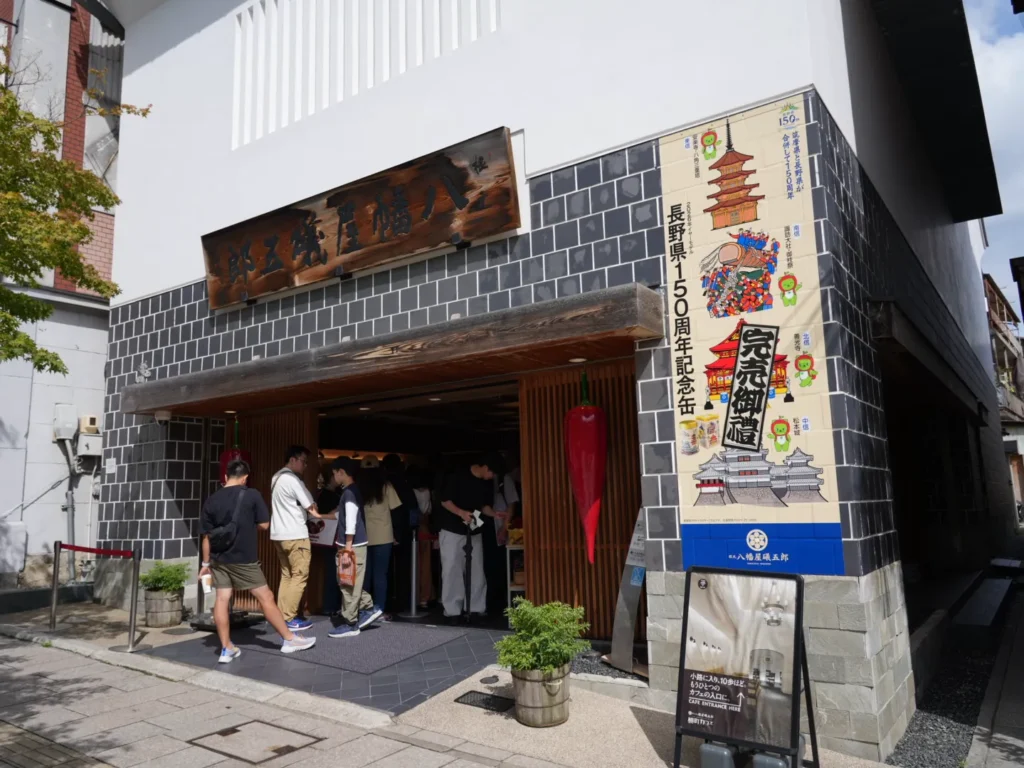
During my recent visit to Zenkoji Temple in Nagano, I stopped by Yawataya Isogoro, one of Japan’s three famous traditional shichimi brands.
The shop was very busy, and there was even a line for the custom shichimi service.
I bought some shichimi togarashi for myself, as well as a product called Manganji Yuzu Kosho.
In this article, I’ll explain what shichimi togarashi is, how it is used in Japan, and what I found at Yawataya Isogoro.
What Is Shichimi Togarashi?
Shichimi togarashi is a traditional Japanese spice blend made mainly with chili pepper and several other spices and aromatic ingredients.
The name literally means something like “seven-flavor chili pepper.”
The exact ingredients are not necessarily the same everywhere. Different makers have their own recipes, and the combination of spices gives each shichimi its own character.
Common ingredients include chili pepper, Japanese pepper (sansho), sesame seeds, dried citrus peel, and seaweed. Some blends also contain ingredients such as ginger, shiso, poppy seeds, or hemp seeds.
Shichimi has been part of Japanese food culture for centuries. Its history goes back to the Edo period, when spice merchants in Edo, now Tokyo, began selling blends of chili pepper and other ingredients.
Today, shichimi is not just a spicy seasoning. The combination of ingredients adds aroma, flavor, and a little heat to Japanese dishes.
How Is Shichimi Togarashi Used?
Shichimi is particularly well known as a seasoning for soba and udon noodles.
You can simply sprinkle a little over a bowl of hot noodles. The chili pepper adds some heat, while the other spices add aroma and complexity.
It can also be used with many other Japanese dishes, including:
- Yakitori
- Beef rice bowls
- Miso soup
- Tempura
- Grilled meat and fish
- Nabe, or Japanese hot pot
- Rice dishes
- Fried foods
There is really no need to limit shichimi to noodles. It can be used whenever you want to add a little spice and aroma to a dish.
Try the Seasonings on the Table
One thing I recommend to visitors to Japan is to look at the seasonings placed on the table when you eat at a Japanese restaurant.
In Japan, it is quite common to find seasonings such as salt, pepper, soy sauce, or shichimi togarashi on the table.
This allows you to adjust the flavor of the food according to your personal preference.
Of course, I recommend trying the dish as it is served first. But if you see a container of shichimi on the table, why not try a small amount?
Start with just a little and see how the flavor changes.
This is a simple but enjoyable part of eating at Japanese restaurants. You can experience the dish as the chef prepared it and then make small adjustments to suit your own taste.
Japan’s Three Famous Shichimi Brands
Japan has several traditional makers of shichimi togarashi, but three historic brands are commonly referred to as the three major shichimi brands in Japan:
- Yagenbori – Tokyo
- Shichimiya Honpo – Kyoto
- Yawataya Isogoro – Nagano
Each brand has its own history and blend of ingredients.
Yagenbori traces its history back to 1625 in Edo, while Shichimiya Honpo is associated with Kyoto and the area around Kiyomizu-dera. Yawataya Isogoro has its roots in Nagano and has been associated with Zenkoji for centuries.
What I find interesting is that even though all three make shichimi, their blends are not exactly the same.
This is a good example of how Japanese food culture can vary from one region to another.
Visiting Yawataya Isogoro at Zenkoji
During my trip to Nagano, I visited Zenkoji Temple, one of the most famous temples in the city.
After visiting the temple, I walked along the approach to Zenkoji and stopped at Yawataya Isogoro’s main shop.
Yawataya Isogoro was founded in 1736 and began selling shichimi in the grounds of Zenkoji. Its main shop is now located at 83 Daimoncho on the Zenkoji approach.
For me, this was an interesting place to visit because it was more than just a shop selling a souvenir.
It is a place where you can see a traditional Japanese seasoning that has been closely connected with the local area for a very long time.
The Shop Was Very Busy
When I visited the Yawataya Isogoro main shop, it was very crowded.
One thing that caught my attention was the line of customers waiting to have their shichimi customized.
At the shop, customers can choose a custom blend according to their preferences.
This makes the experience more interesting than simply picking up a standard bottle from a supermarket.
You can think about whether you prefer more aroma or more heat and create a blend that suits your taste.
The shop’s custom blending service is one of the experiences available at the main store.
Seeing so many people waiting for their own custom blend also made me realize how much shichimi is still connected to everyday Japanese food culture.
Buying Shichimi Togarashi
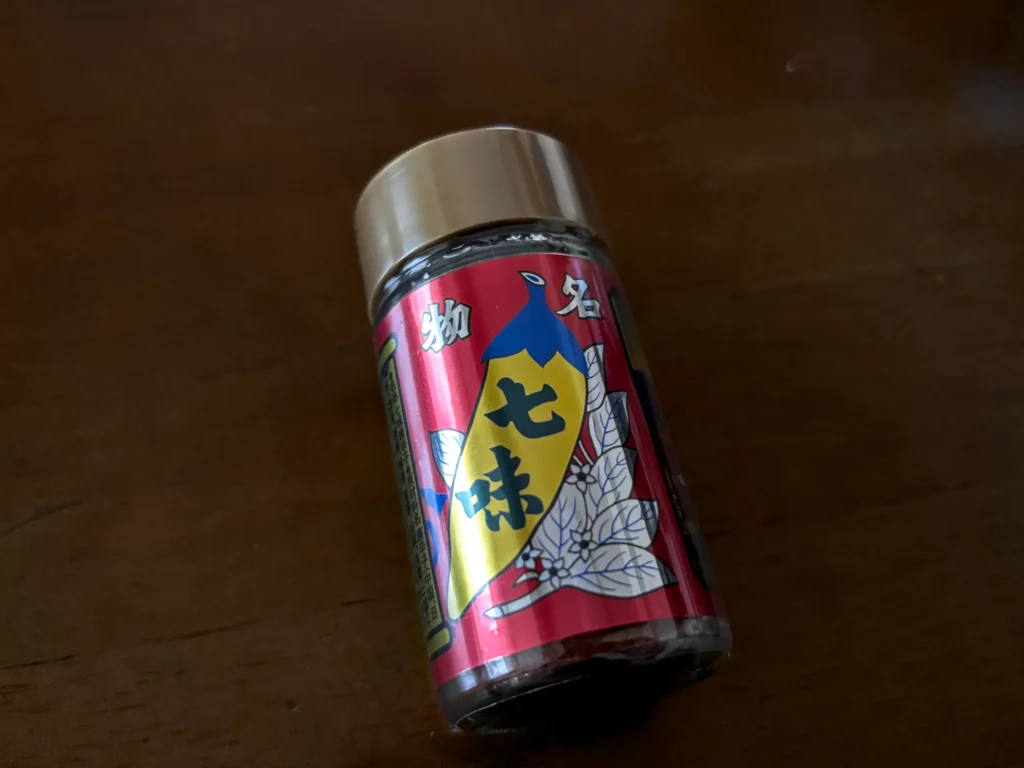
I decided to buy some Yawataya Isogoro shichimi togarashi.
It was a nice souvenir from my visit to Zenkoji because it is small, easy to take home, and something I can actually use in my everyday meals.
I also like the idea of buying a local seasoning when traveling in Japan.
Instead of buying only a typical souvenir, you can bring home something that allows you to recreate a little of the taste of your trip.
Yawataya Isogoro makes several spice products in addition to its traditional shichimi, including yuzu shichimi, sansho shichimi, ichimi, and other spice products.
I Also Bought Manganji Yuzu Kosho
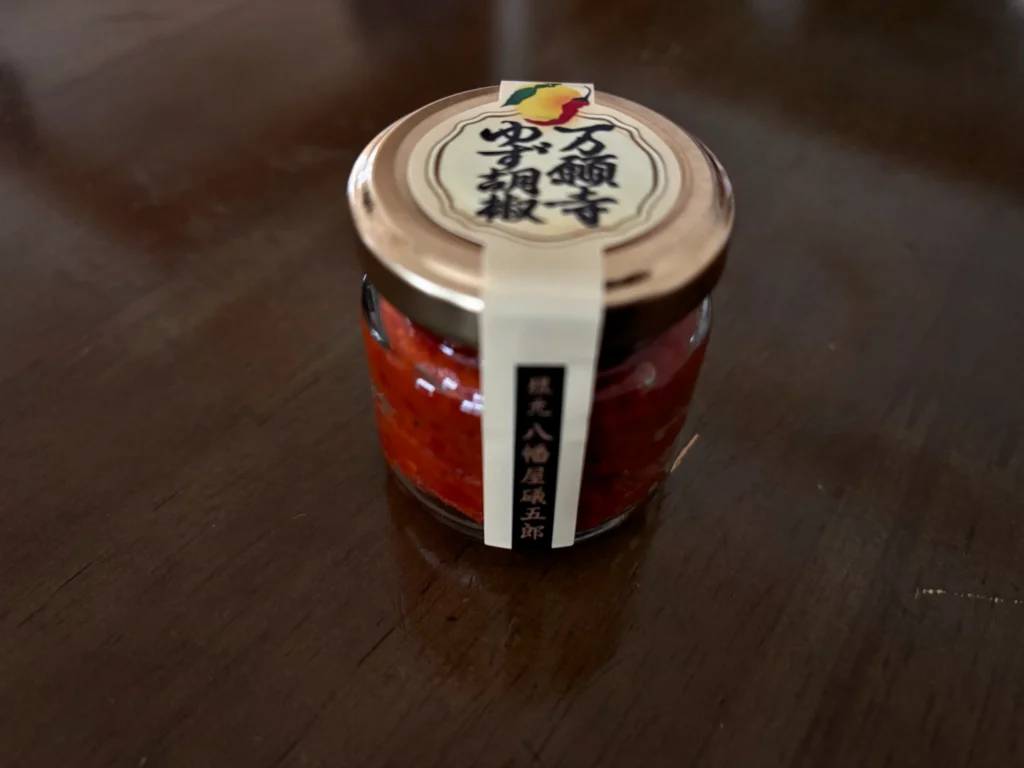
I didn’t stop at shichimi.
I also bought Manganji Yuzu Kosho.
I really like yuzu kosho, and I always want it when I eat nabe, or Japanese hot pot.
What Is Yuzu Kosho?
Yuzu kosho is a Japanese condiment made from yuzu citrus, chili pepper, and salt.
Despite the word “kosho,” which can mean pepper in Japanese, yuzu kosho is not made with the black pepper commonly used in Western cooking. Its characteristic heat comes from chili pepper.
The combination of the fresh citrus aroma of yuzu and the heat of chili pepper makes it a very distinctive Japanese condiment.
I especially like using it with nabe.
When I eat hot pot, I often add a little yuzu kosho to the broth or use it as a condiment with the ingredients.
The citrus aroma gives the dish a refreshing flavor, while the chili pepper adds heat.
For me, yuzu kosho is one of those small Japanese condiments that can make a big difference to a meal.
Shichimi and Yuzu Kosho: Two Japanese Condiments to Try
Shichimi togarashi and yuzu kosho are both spicy Japanese condiments, but they have quite different flavors.
Shichimi is a blend of several spices and is especially useful when you want to add aroma and a little heat to noodles, grilled foods, soups, and other dishes.
Yuzu kosho has a much more distinctive citrus aroma and works particularly well with nabe, grilled meat, fish, and other dishes.
If you are traveling around Japan, I recommend looking for local seasonings like these.
They are easy to take home, and they can give you a taste of Japanese food culture even after your trip is over.
A Small Taste of Japanese Food Culture
For visitors to Japan, food culture is not only about sushi, ramen, tempura, or other famous dishes.
Sometimes, the small things on the table tell you something about everyday Japanese food culture.
A small container of shichimi next to a bowl of soba, or a little packet of yuzu kosho served with a hot pot, can change the flavor of a meal.
And if you visit Nagano, stopping at Yawataya Isogoro near Zenkoji is a great way to learn more about one of Japan’s traditional shichimi brands.
I enjoyed buying my own shichimi there, and I’m also looking forward to using the Manganji Yuzu Kosho with my next nabe.
If you see shichimi togarashi on the table at a Japanese restaurant, don’t be afraid to try it.
Start with a little, adjust the flavor to your liking, and enjoy your meal the Japanese way.