Kamakura is one of the easiest day-trip destinations to visit from Yokohama.
Located just a short train ride from Yokohama, Kamakura is famous for its historic temples and shrines, traditional streets, beautiful nature, and relaxed atmosphere. It is a great place to experience a different side of Japan away from the busy city.
I visited Kamakura during the autumn foliage season and spent the day walking through some of the city’s most famous historic sites.
My route took me from Kamakura Station to Tsurugaoka Hachimangu Shrine, then on to Kenchoji Temple, and finally to Engakuji Temple.
One of the highlights was hiking from Kenchoji to Engakuji through the hills of Kamakura.
Here is what my autumn walk through Kamakura was like.
Kamakura: A Great Day Trip from Yokohama

Kamakura is one of Kanagawa Prefecture’s most popular tourist destinations.
The city was once the political center of Japan during the Kamakura period, and many historic temples and shrines remain today. At the same time, Kamakura is surrounded by hills and is also close to the sea.
This combination of history, nature, and traditional Japanese scenery makes Kamakura a particularly enjoyable place to explore on foot.
Another advantage is its convenient location.
From Yokohama, Kamakura can be reached easily by train, making it possible to visit for a day without needing to stay overnight.
Kamakura also looks different throughout the year. Cherry blossoms are popular in spring, the beaches attract visitors in summer, autumn brings beautiful foliage, and winter offers a quieter atmosphere around the temples and shrines.
For this trip, I chose autumn, when the leaves around Kamakura were changing color.
From Kamakura Station to Tsurugaoka Hachimangu Shrine
I started my Kamakura walking trip at Kamakura Station.
From the station, I walked toward Tsurugaoka Hachimangu Shrine, one of the most famous landmarks in Kamakura.
Tsurugaoka Hachimangu Shrine

Tsurugaoka Hachimangu Shrine is one of the most important and famous shrines in Kamakura.
The shrine has a strong connection with Minamoto no Yoritomo, the founder of the Kamakura shogunate, and has played an important role in the history of the city.
As you enter the shrine grounds, you will see a large torii gate, a long approach, and the main shrine buildings at the top of the steps.
During autumn, the trees around the grounds turn shades of red and yellow, creating beautiful scenery alongside the traditional architecture.
After exploring the shrine, I continued on foot toward my next destination, Kenchoji Temple.
Walking from Tsurugaoka Hachimangu to Kenchoji Temple
Rather than taking a bus or train, I decided to walk from Tsurugaoka Hachimangu to Kenchoji.
Walking between the attractions is a good way to experience another side of Kamakura.
As you leave the busy tourist areas behind, the surroundings gradually become quieter. The landscape also begins to feel more natural as you approach the hills around Kenchoji.
Kenchoji Temple

Kenchoji is one of Kamakura’s most famous Zen temples.
Founded in 1253, Kenchoji is considered the first-ranked temple among the Kamakura Five Great Zen Temples.
The temple grounds are quite large and include historic buildings such as the Sanmon Gate, Buddha Hall, and Dharma Hall.
During the autumn foliage season, the trees around the temple turn red and yellow, creating a beautiful contrast with the historic buildings.
After exploring Kenchoji, I headed toward the hiking trail that leads through the hills toward Engakuji.
This was one of the most memorable parts of my Kamakura walk.
Hiking from Kenchoji to Engakuji
One of the things I enjoyed most about Kamakura was that the city offers more than temples and shrines.
The surrounding hills are crossed by several hiking trails, allowing visitors to experience Kamakura’s natural scenery as well.
Instead of simply walking along the road from Kenchoji to Engakuji, I took a hiking route through the hills.
Enjoying Kamakura’s Nature

Once I entered the trail, the atmosphere changed completely.
The paved streets and tourist areas gave way to a quiet forest path surrounded by trees.
Walking through the hills was a nice change of pace after visiting the historic temples.
Because I visited during autumn, the colorful leaves made the trail even more enjoyable.
The trail also gives you a chance to see a more natural side of Kamakura that you might miss if you only visit the main tourist attractions.
However, this is a hiking trail rather than an ordinary sightseeing path.
There are some uphill and downhill sections, and the ground can become slippery after rain. Comfortable walking shoes are recommended, especially if you are not used to hiking.
It is also a good idea to allow plenty of time rather than rushing from one temple to the next.
From Kenchoji to Engakuji on Foot
For me, the best part of this route was the combination of history and nature.
You can begin the day by visiting Tsurugaoka Hachimangu, explore the historic buildings at Kenchoji, and then leave the temple grounds behind to walk through the hills.
Eventually, you arrive at Engakuji near Kita-Kamakura Station.
This makes the route feel like more than a typical temple tour. It is a small walking adventure through the historic and natural landscapes of Kamakura.
Arriving at Engakuji Temple
After hiking through the hills, I eventually arrived at Engakuji Temple.
Engakuji Temple
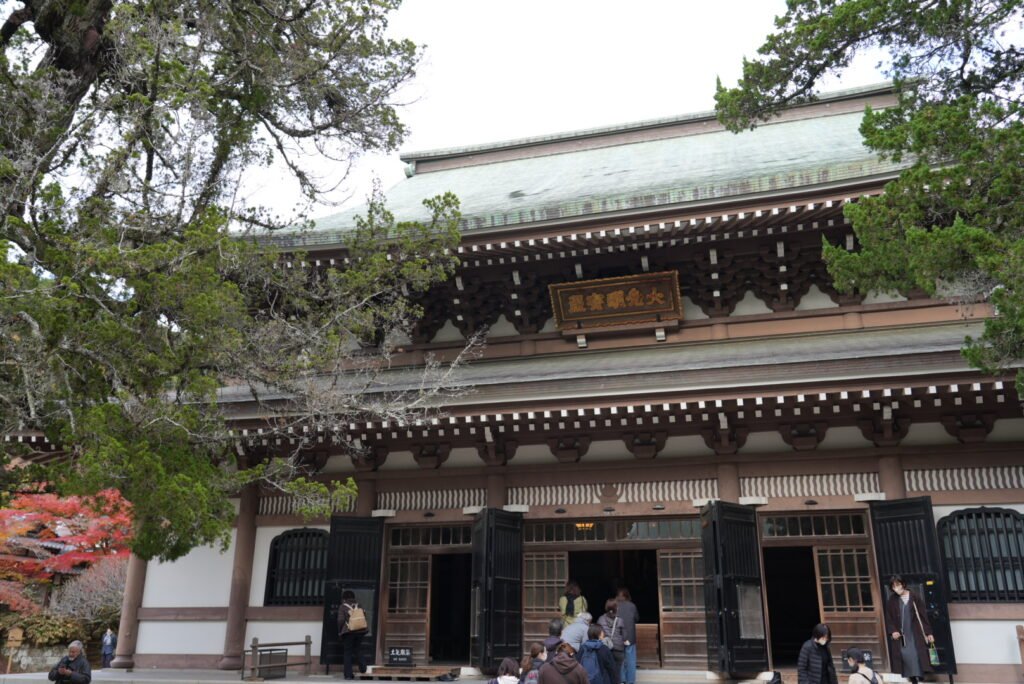
Engakuji is another famous Zen temple in Kamakura and is located right next to Kita-Kamakura Station.
Founded in 1282, Engakuji is one of the most important Zen temples in the city and is also part of the Kamakura Five Great Zen Temples.
The temple grounds have a peaceful atmosphere, with historic buildings surrounded by trees.
In autumn, the colorful foliage makes the temple particularly beautiful.
After walking through the hills from Kenchoji, the quiet atmosphere of Engakuji felt like a perfect place to finish the walk.
My Autumn Walk in Kamakura
For this Kamakura trip, I visited three famous historic sites:
- Tsurugaoka Hachimangu Shrine
- Kenchoji Temple
- Engakuji Temple
I started at Kamakura Station, walked to Tsurugaoka Hachimangu, continued on foot to Kenchoji, and then took a hiking trail through the hills to Engakuji.
What I liked about this route was that it combined several different experiences in one day.
You can see historic Japanese temples and shrines, walk through the streets of Kamakura, and enjoy nature along the hiking trail.
The autumn foliage made the experience even more memorable.
If you are visiting Yokohama and want to take a day trip somewhere nearby, Kamakura is an excellent choice.
And if you want to experience more than the usual sightseeing spots, I recommend adding a short hike to your Kamakura itinerary.
Walking through the hills between Kenchoji and Engakuji gave me a chance to see a quieter and more natural side of this historic Japanese city.
Final Thoughts

Kamakura is close enough to Yokohama to visit easily in a day, but it feels very different from the city.
Its historic temples and shrines, beautiful seasonal scenery, and hiking trails make it a great destination for travelers who want to experience both Japanese culture and nature.
My autumn walking route from Tsurugaoka Hachimangu to Kenchoji and then to Engakuji was a great way to explore Kamakura at a relaxed pace.
If you visit Kamakura during the autumn foliage season, consider putting on a comfortable pair of walking shoes and exploring the city on foot. You may discover a side of Kamakura that you would miss by simply moving from one attraction to another by train or bus.