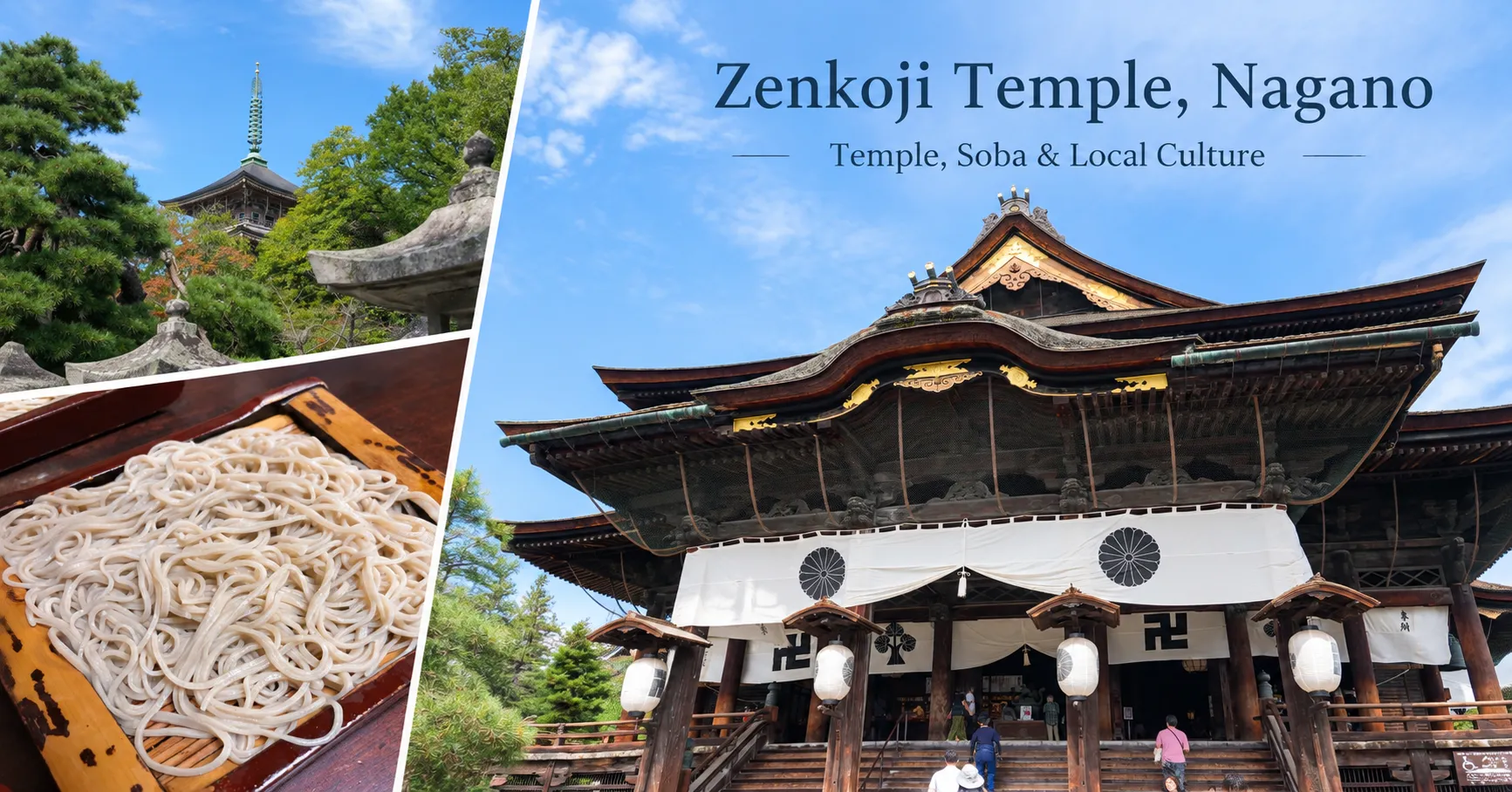
During my trip to Nagano, I visited Zenkoji Temple, one of the most famous Buddhist temples in Nagano City.
Zenkoji has a long history and is known for its impressive traditional architecture. From the Nioh Gate at the entrance to the large main hall, there are several important buildings to see along the approach.
After visiting the temple, I also enjoyed Sarashina soba at a popular soba restaurant near Zenkoji and bought some famous Shichimi Togarashi as a souvenir.
In this article, I’ll share my visit to Zenkoji Temple, including the Nioh Gate, Sanmon Gate, main hall, local soba, and a stop at Yawataya Isogoro.
About Zenkoji Temple
Zenkoji Temple is a historic Buddhist temple in Nagano City, Nagano Prefecture.
The temple is famous throughout Japan and attracts many visitors throughout the year. One of the highlights of visiting Zenkoji is walking along the approach toward the main hall and seeing the traditional buildings along the way.
There are several important structures within the temple grounds, including the Nioh Gate, Sanmon Gate, and main hall.
I entered Zenkoji through the Nioh Gate and walked toward the main hall.
Entering Zenkoji Through the Nioh Gate
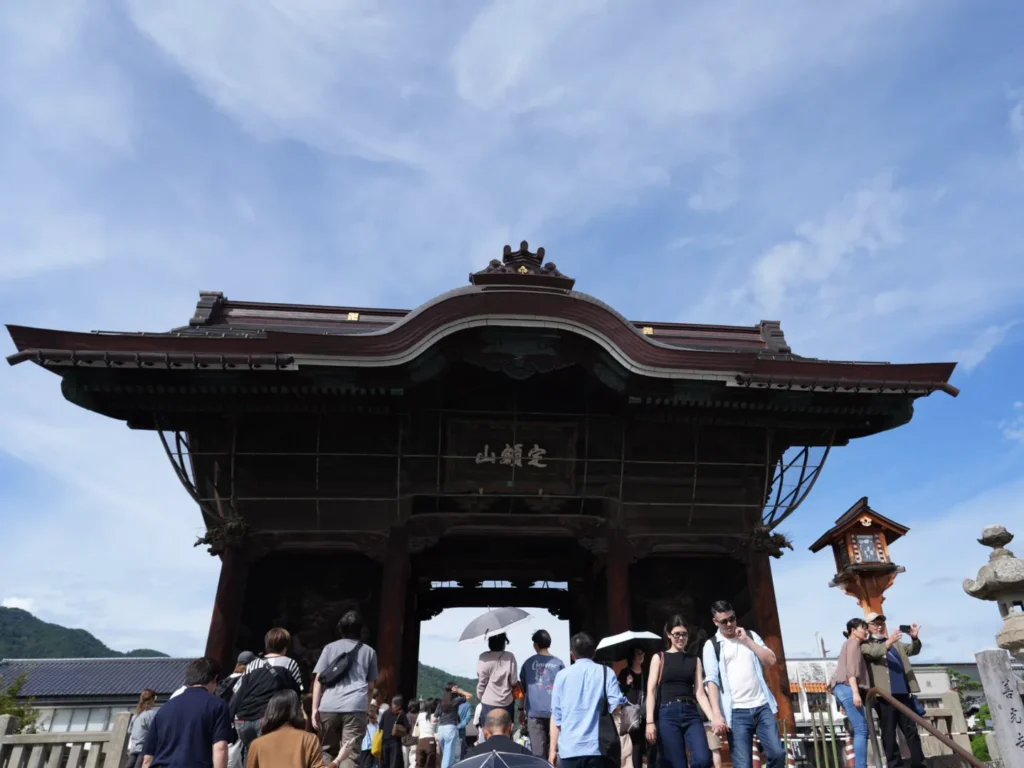
The first major building I saw was the Nioh Gate.
The gate is known for the two large Nioh statues standing on either side of the entrance. These statues traditionally serve as guardians of Buddhist temples.
The current Nioh Gate was rebuilt in 1918 after the previous gate was destroyed by fire. It is a large wooden structure made mainly from Japanese zelkova wood and is designated as a Registered Tangible Cultural Property.
The two Nioh statues immediately caught my attention.
As I walked through the gate, I could feel that I was entering a very different atmosphere from the streets outside.
From the Nioh Gate, the approach continues toward the center of the temple grounds.
The Impressive Sanmon Gate
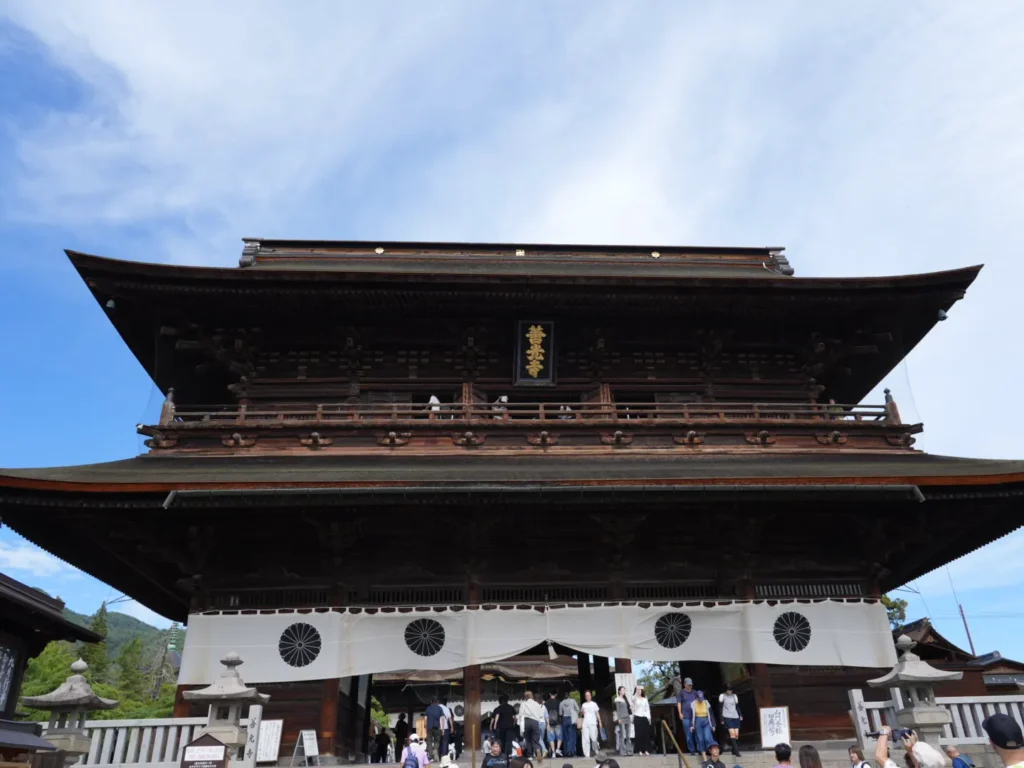
After passing through the Nioh Gate, the next impressive structure was the Sanmon Gate.
The large wooden gate stands prominently along the approach to the main hall. Seeing it from a distance gives you a good sense of the scale of Zenkoji.
The current Sanmon Gate was built in 1750 and is designated as an Important Cultural Property of Japan. It was restored between 2002 and 2007, including restoration of its traditional wooden shingle roof.
One of the details I noticed was the large sign above the entrance displaying the three characters for “Zenkoji.”
The sign is known as the Hato-gaku, or “pigeon character plaque.” Five pigeons are said to be hidden within the three characters.
After looking around the Sanmon Gate, I continued toward the main hall.
Visiting the Main Hall of Zenkoji
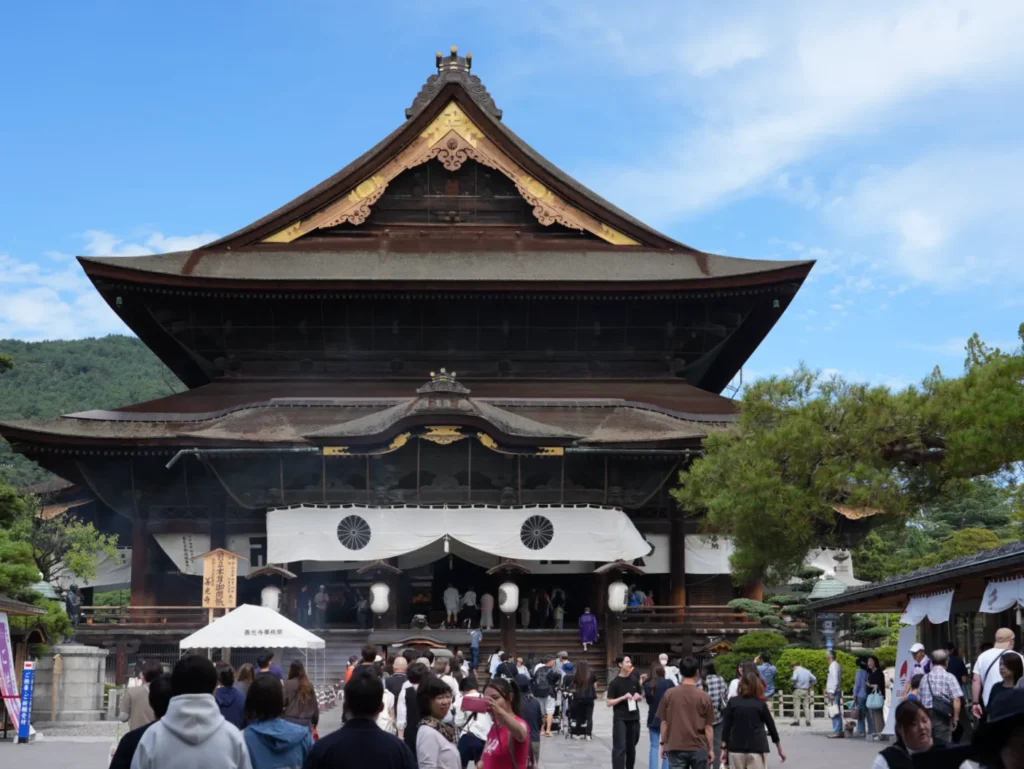
Beyond the Sanmon Gate stands the main hall of Zenkoji.
The current main hall was rebuilt in 1707 and is designated as a National Treasure of Japan. It is a large wooden building, approximately 27 meters high, 24 meters wide, and 54 meters deep.
The building has a distinctive architectural style known as Shumoku-zukuri. When viewed from above, its shape resembles the wooden mallet used to strike a temple bell.
I walked to the main hall and paid my respects.
After walking through the Nioh Gate and Sanmon Gate, arriving at the main hall felt like the natural conclusion of the visit.
The scale of the building is impressive, and it is worth taking some time to look at the details of the traditional wooden architecture.
Eating Sarashina Soba at Kado no Daimaru
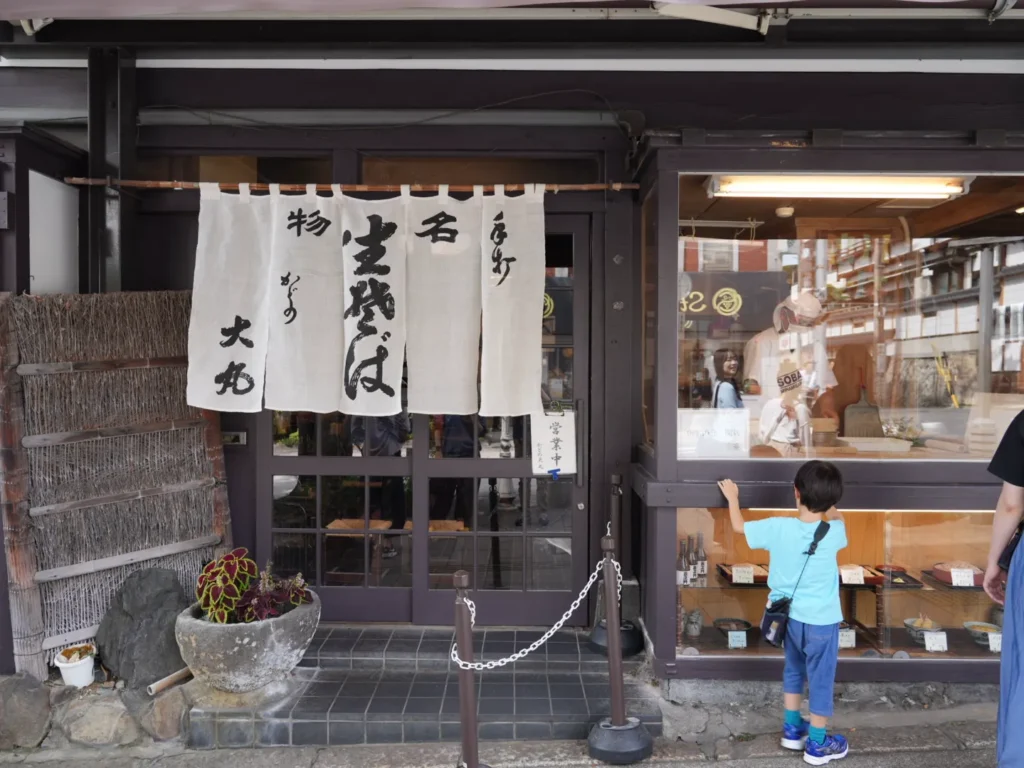
After visiting Zenkoji, I walked along the approach and stopped at a soba restaurant called Kado no Daimaru.
Eating soba was one of the things I wanted to do during my visit to Nagano. The restaurant is located near Zenkoji, making it a convenient place to stop after visiting the temple.
I ordered the restaurant’s most popular Sarashina soba.
What Is Sarashina Soba?
Sarashina soba is a type of Japanese buckwheat noodle made mainly from the lighter-colored inner part of the buckwheat grain.
Because of this, Sarashina soba is generally lighter in color than many other types of soba. It has a smooth texture and a delicate flavor.
I enjoyed the smooth texture and light taste of the noodles.
After walking around Zenkoji, having a bowl of soba was a very satisfying way to finish my visit.
If you visit Zenkoji, I recommend taking some time to explore the restaurants along the approach as well. Trying local soba is a great way to experience another part of Nagano’s food culture.
Buying Shichimi Togarashi at Yawataya Isogoro
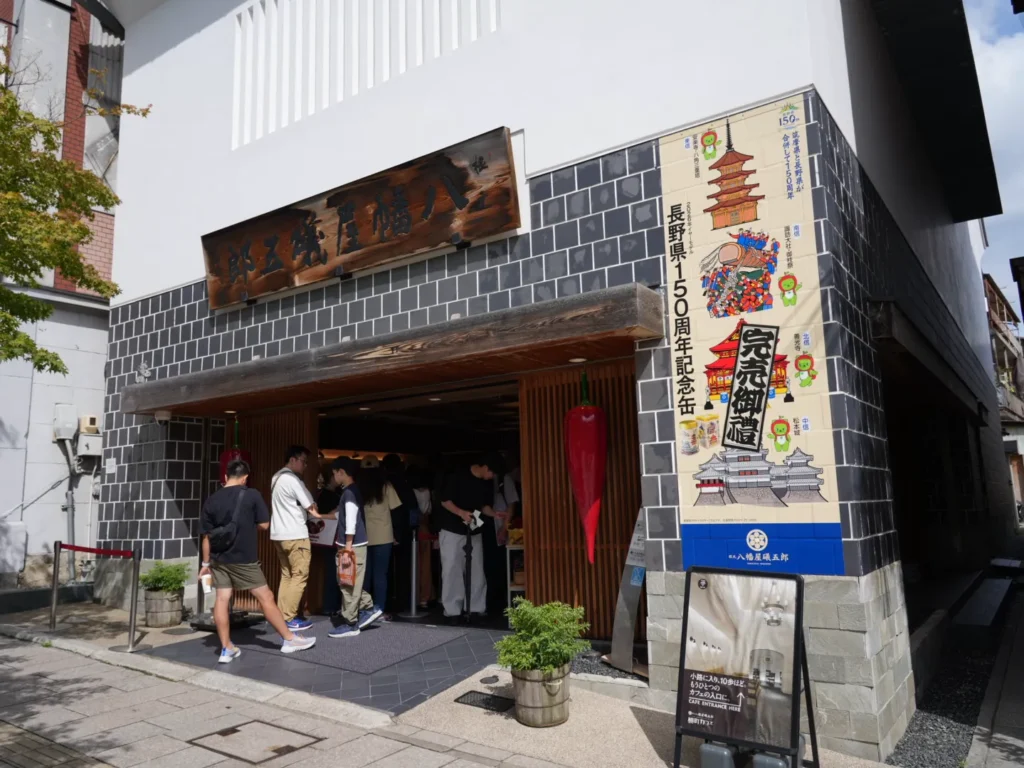
Before leaving the Zenkoji area, I stopped at Yawataya Isogoro, a famous shop specializing in Japanese seven-spice chili pepper, known as Shichimi Togarashi.
The main store is located along the Zenkoji approach in the Daimon area and has a long history connected with Zenkoji and Nagano.
The shop sells a variety of Shichimi products and also offers custom-blended spice.
I bought traditional Shichimi Togarashi as a souvenir.
Yawataya Isogoro’s traditional Shichimi blend contains ingredients such as chili pepper, Japanese pepper, ginger, hemp seed, sesame, citrus peel, and shiso.
I think Shichimi is a particularly useful souvenir from Nagano because it can be used with many Japanese dishes at home.
It is also small and easy to take home, making it a convenient souvenir after a trip to Zenkoji.
My Zenkoji Temple Visit in Nagano
My visit to Zenkoji was more than just seeing the main hall.
I entered through the Nioh Gate, admired the large guardian statues, and then continued to the impressive Sanmon Gate. From there, I reached the main hall and paid my respects.
After the temple visit, I enjoyed Sarashina soba at Kado no Daimaru and bought Shichimi Togarashi from Yawataya Isogoro as a souvenir.
For me, this combination made the visit especially enjoyable: historic architecture, traditional Japanese food, and a local souvenir.
If you are planning a trip to Nagano, Zenkoji Temple is a place worth adding to your itinerary. Rather than visiting only the main hall, I recommend walking slowly along the approach and taking time to enjoy the gates, shops, restaurants, and atmosphere around the temple.
