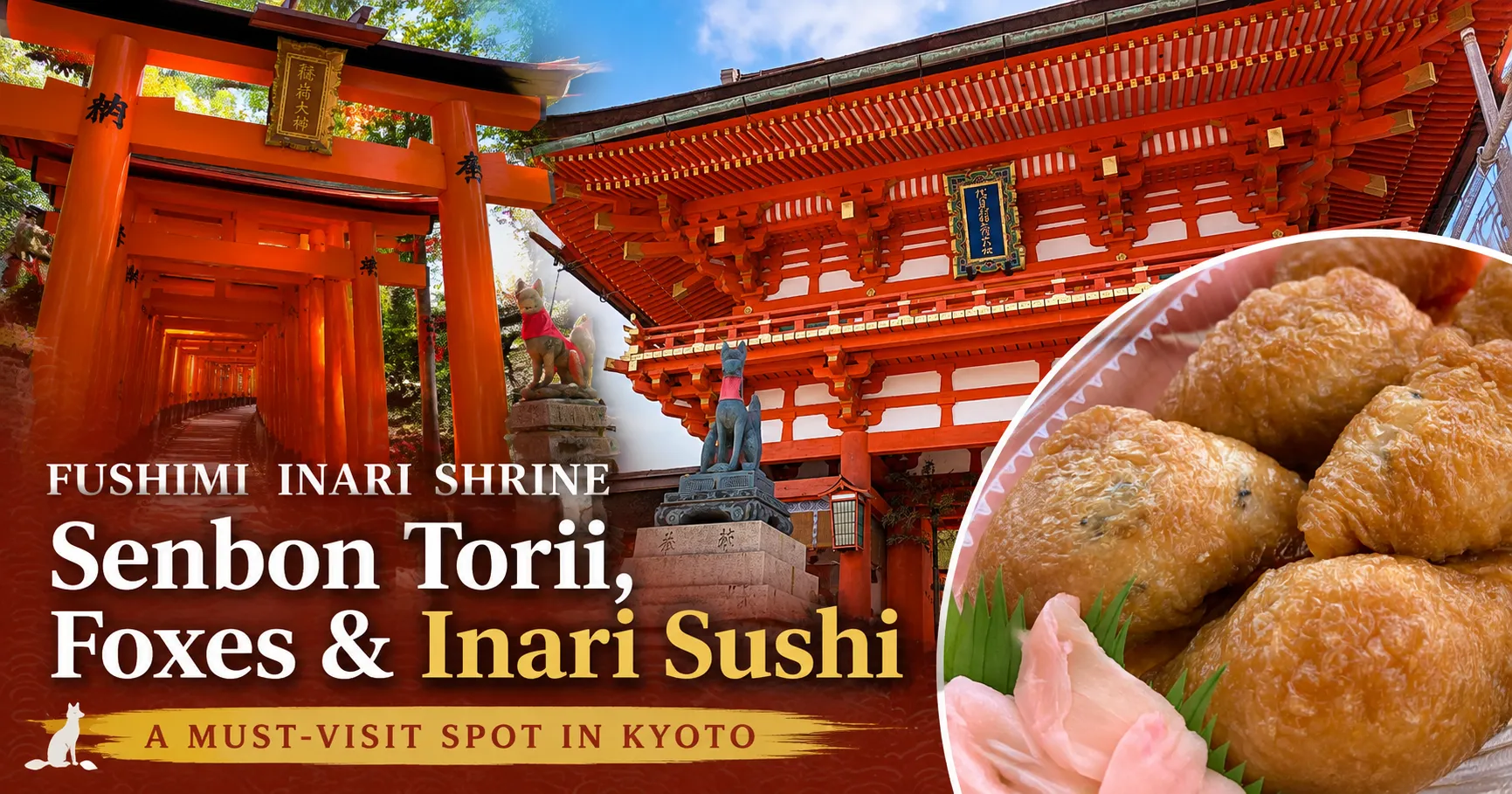
One of the most popular places to visit in Kyoto, especially among international travelers, is Fushimi Inari Shrine.
You may have seen photos of its famous Senbon Torii, a seemingly endless path of bright red torii gates leading up the mountain. But Fushimi Inari is more than just its iconic gates. The shrine is also closely connected with foxes, Japanese traditions, and inari sushi.
Here is a quick guide to visiting Fushimi Inari and what to look out for along the way.
Where Is Fushimi Inari Shrine?
Fushimi Inari Shrine is located in Fushimi Ward, Kyoto.
It is very easy to reach from Kyoto Station. The JR Inari Station is directly in front of the shrine, so you can start exploring almost as soon as you get off the train.
As you leave the station, you will see a large torii gate marking the entrance to the shrine.
What Is Fushimi Inari Shrine?
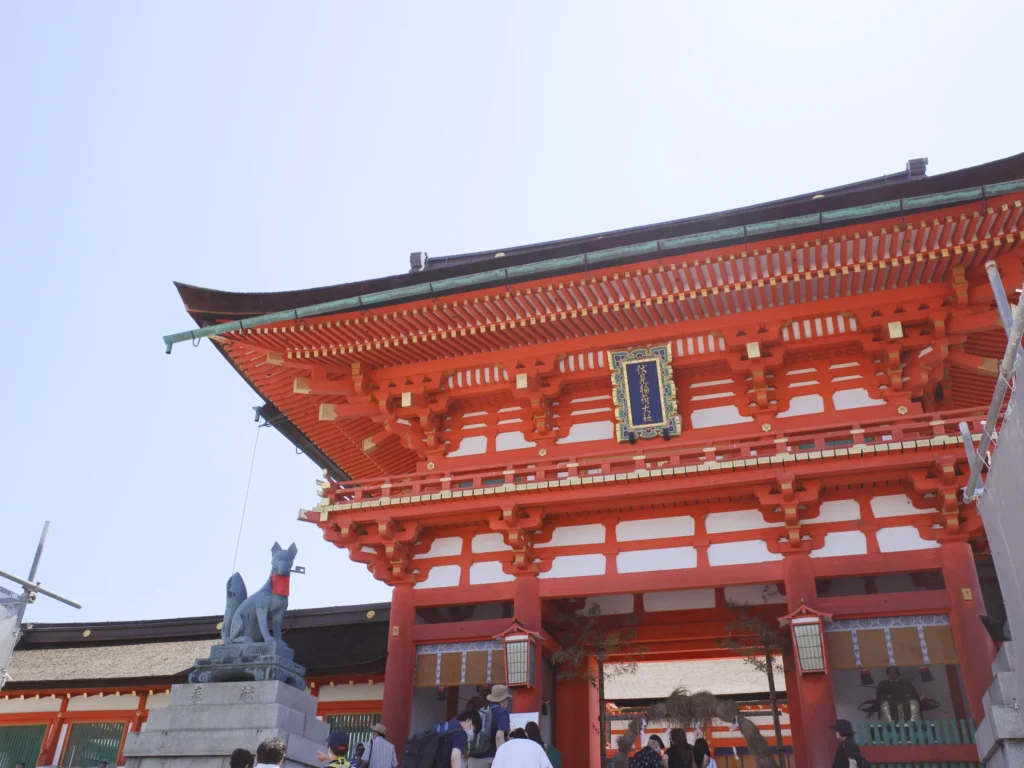
Fushimi Inari Taisha is the head shrine of Inari shrines, which can be found throughout Japan.
Inari is traditionally associated with rice, agriculture, business, and prosperity, and the shrine has been an important place of worship for centuries.
One of the best things about Fushimi Inari is that the visit is not limited to the main shrine buildings. The shrine’s grounds extend up Mount Inari, with paths leading through forests and past smaller shrines.
You can simply visit the main shrine and Senbon Torii, or spend several hours walking further up the mountain.
If you do not have much time, there is no need to complete the entire mountain trail. You can enjoy the most famous sections and turn back when you like.
Walking Through the Famous Senbon Torii

The Senbon Torii is undoubtedly the most famous sight at Fushimi Inari.
Hundreds of vermilion torii gates stand closely together along the mountain path, creating one of the most memorable walks in Kyoto.
The name “Senbon Torii” means “thousands of torii gates,” although there are actually far more than a thousand torii gates throughout the shrine grounds.
The gates have been donated by individuals and businesses as an expression of gratitude or in the hope of receiving blessings.
Fushimi Inari can get very crowded, particularly during the daytime. If you want to enjoy a quieter walk and take photos more easily, arriving early is a good idea.
Why Are There So Many Foxes?
As you explore Fushimi Inari, you will notice fox statues throughout the shrine.
Foxes are considered messengers of Inari Okami, the deity worshipped at Inari shrines.
Some fox statues hold objects in their mouths, such as rice ears, scrolls, or keys. These objects have different symbolic meanings.
So while walking through Fushimi Inari, don’t just look at the torii gates. Take a moment to look at the fox statues, too.
Inari Sushi: A Local Specialty
Fushimi Inari is also associated with inari sushi, a popular Japanese food made with seasoned sushi rice wrapped in sweet and savory fried tofu.
There is a traditional connection between Inari shrines and fried tofu, which is one reason why inari sushi is particularly popular around Fushimi Inari.
After visiting the shrine, trying some inari sushi is a great way to experience another side of the area’s culture.
Try Inari Sushi at Nezameya

During my visit to Fushimi Inari, I stopped at Nezameya, a long-established restaurant located along the approach to the shrine.
The restaurant serves traditional Japanese dishes, including inari sushi, making it a natural place to stop while exploring Fushimi Inari.
The sweet and savory seasoned tofu pairs nicely with the vinegared sushi rice. It is also a convenient food to enjoy after walking around the shrine.
If you visit Fushimi Inari, I recommend taking some time to explore the food around the shrine, rather than simply visiting the torii gates and leaving.
Enjoy Fushimi Inari Beyond the Torii Gates
Fushimi Inari Shrine is famous around the world for its beautiful Senbon Torii, but there is much more to discover.
Walk through the torii gates, look for the fox statues, explore the mountain at your own pace, and try some local food such as inari sushi.
For visitors to Kyoto, Fushimi Inari is a great place to experience both Japanese culture and local food in one visit.

